
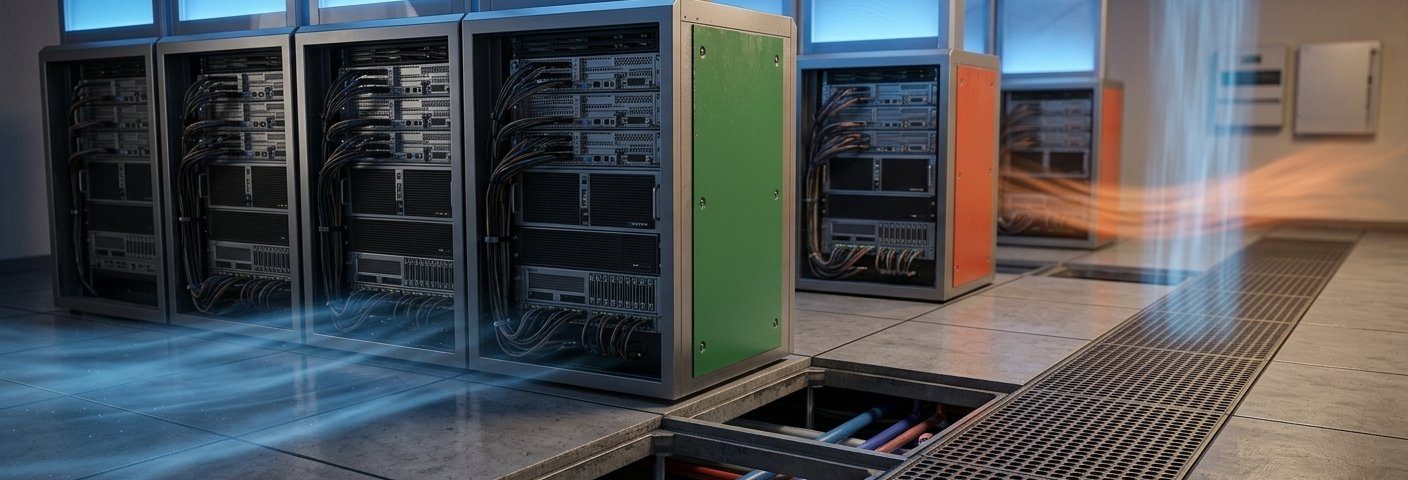
Australia has become one of the most attractive destinations in the world for data centre investment. Roughly 90 more facilities are reportedly in the pipeline across the country, on top of the hundreds already operating. Most of the public conversation around this boom has focused on electricity: how much power these facilities draw, where that power comes from, and whether the grid can cope.
Water has stayed largely out of the spotlight. That is starting to change.
The hidden water cost of AI
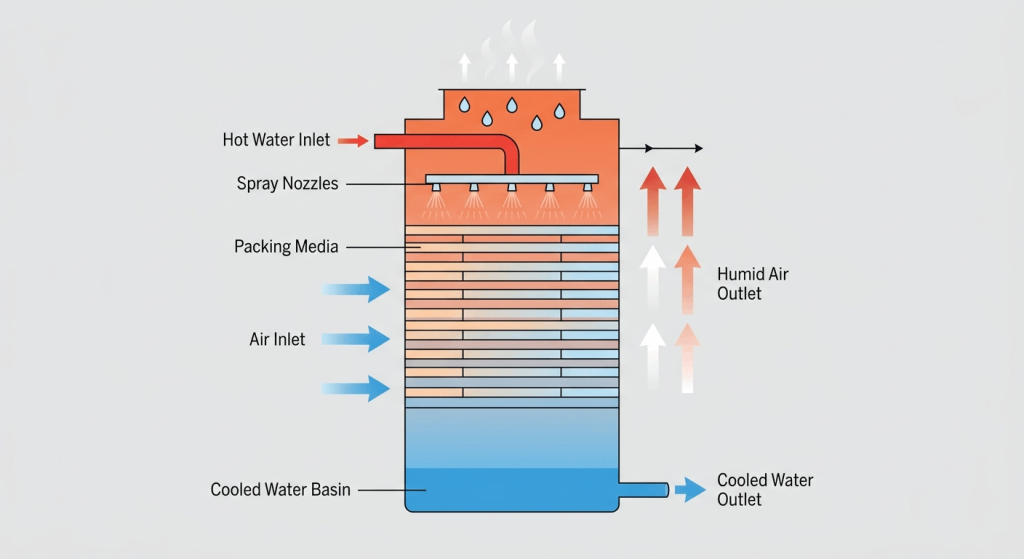
Every large language model query and every training run ultimately traces back to a server rack that needs to stay cool. Many Australian data centres rely on evaporative cooling, a method that is energy-efficient but water-intensive. Depending on the cooling architecture, facilities can use in the order of 15 litres of water per kilowatt-hour of computing load.
Globally, the scale of this is significant. One widely cited estimate puts direct water consumption for US data centre cooling on a path from around 21 billion litres a year in 2014 to somewhere between 145 and 270 billion litres a year by 2028. Water use per unit of digital output can also vary enormously, by a factor of up to 10,000, depending on the cooling system, the water intensity of the local power grid and how efficiently the computing itself is done.
Australia’s numbers currently look modest by comparison. Industry-commissioned analysis puts direct on-site water use by the country’s data centres, mostly for cooling, at around 5.5 gigalitres a year, a small fraction of national water use. In Sydney, data centres account for a larger but still limited share of the city’s total water supply.
The concern is not where things stand today. It is where the growth trajectory leads.
Australia’s water infrastructure under strain
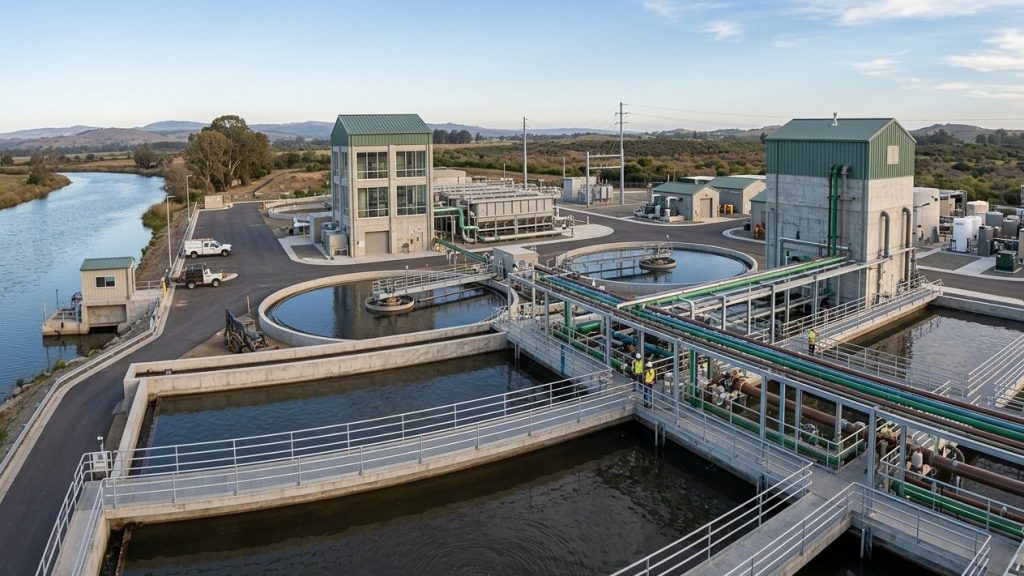
Sydney Water has told a New South Wales parliamentary inquiry that if proposed data centre developments proceed with water-intensive cooling as currently planned, cumulative demand from the sector could reach 250 megalitres a day by 2035. That figure is built on connection applications rather than confirmed consumption, and utilities are upfront about that distinction. What worries them is less the raw number and more the pattern behind it: large industrial customers drawing continuously from water systems in growth corridors that are already under pressure from drought and population growth.
Western Australia faces its own version of this problem, and arguably a more acute one. Perth sits in one of the most water-stressed capital cities in the country, reliant on a mix of desalination, groundwater and a dam system fed by rainfall that has been declining for decades. Regional and remote parts of WA, where industrial and mining operations are already major water users, have even less headroom to absorb a new category of large-scale water demand.
Policy has begun to respond. In March 2026, the Australian Government introduced a national framework of expectations for data centre and AI infrastructure developers, with water use as one of five core pillars. Developers are now expected to engage early with water utilities and communities on site selection and water sourcing, adopt efficient cooling technologies, prioritise non-potable water where possible, and report transparently on usage. State-level regulators, including in New South Wales, are moving toward formal Water Usage Effectiveness standards as the likely next step.
Why municipal supply was never built for this
Metropolitan water systems in Australia were designed around residential and commercial demand patterns: predictable daily and seasonal cycles, spread across millions of small connections. A single data centre campus can draw more continuously and at greater volume than an entire suburb, and it competes for the same source water as agriculture, residential growth and existing industry.
This is also a design problem, not only a supply problem. Cooling architecture is locked in at the construction stage. Retrofitting a facility from evaporative cooling to a closed-loop or liquid cooling system after the fact is not a straightforward equipment swap; it is closer to a structural rebuild. Decisions made at approval stage effectively set a facility’s water demand for the next 20 to 30 years. That makes water strategy, and specifically industrial water reuse, something that needs to be built in from day one rather than added later.
Industrial water reuse as the missing piece
Reuse and recycling cover a range of approaches: closed-loop cooling systems that recirculate water rather than losing it to evaporation, on-site treatment that allows greywater or process water to be reused within a facility, and heat recovery systems that repurpose waste heat instead of simply discharging it. Well-designed systems can recycle up to 95 percent of the water a facility would otherwise draw from mains supply.
For data centre operators and the industrial users they compete with for water access, reuse reduces exposure on two fronts. It lowers the volume drawn from stressed municipal or regional supply, and it reduces regulatory risk as governments move toward mandatory reporting and efficiency thresholds. In water-stressed and remote-adjacent regions, where new mains connections may not be feasible at the scale required, on-site treatment and reuse can be the difference between a project proceeding and stalling at approval stage.
Why ABCO Water is equipped to solve the AI Water Problem
Solving this problem at the facility level requires specialists in industrial water treatment, not general water utilities. ABCO Water is one of the providers active in this space in Australia, with a background in treating water for industrial-scale operations in remote and arid environments, the same conditions that make large parts of the country’s data centre growth corridors difficult from a water perspective.
That experience matters because industrial reuse systems need to be engineered for the specific chemistry and volume of the site, not adapted from a generic template. Providers with a track record in remote and water-stressed regions bring practical knowledge of how to design systems that hold up under continuous industrial load, which is exactly the demand profile a data centre presents.
What this means for AI infrastructure planning
Water strategy is becoming a site-selection criterion in its own right, alongside power availability and connectivity. Developers weighing where to build are increasingly factoring in local water stress, the availability of non-potable or recycled water sources, and the likely direction of state-level efficiency standards before committing to a location.
Reporting requirements are only going to tighten. As transparency around usage becomes mandatory rather than voluntary, and as ESG expectations from investors and government continue to build, facilities that have already built reuse and recycling into their design will be better positioned than those planning to retrofit later.
Closing thoughts
Power has dominated the conversation about what limits AI’s growth in Australia. Water may end up being the quieter but equally decisive factor, particularly in the water-stressed regions where much of the country’s new digital infrastructure is being planned. How well the industry solves for water reuse now will shape not just individual project approvals, but how much of Australia’s AI ambitions can actually be built.

With a background rooted in conversion-focused copy, Markus doesn't just write to fill space. He builds narratives designed to move the needle. He understands that a well-designed website only reaches its full potential when the words on the screen are as fast, sharp, and responsive as the code beneath them.
- Can Australia’s Water Infrastructure Keep Up With the AI Boom? - July 30, 2026
- Perth’s Top Traffic Lawyers: What to Look For in 2026 - June 22, 2026
- Top Google Ads Management Agencies in Perth: ROAS, Fees & Performance Guide - May 22, 2026