
Artificial intelligence has reshaped how the world thinks about energy. Now it is doing the same for water. As data centres multiply to meet the demands of generative AI, the volume of water required to keep those facilities running has become one of the more consequential infrastructure questions of the decade, and one that is directly relevant to how industrial operators manage water across their own operations.
Why AI Needs So Much Water
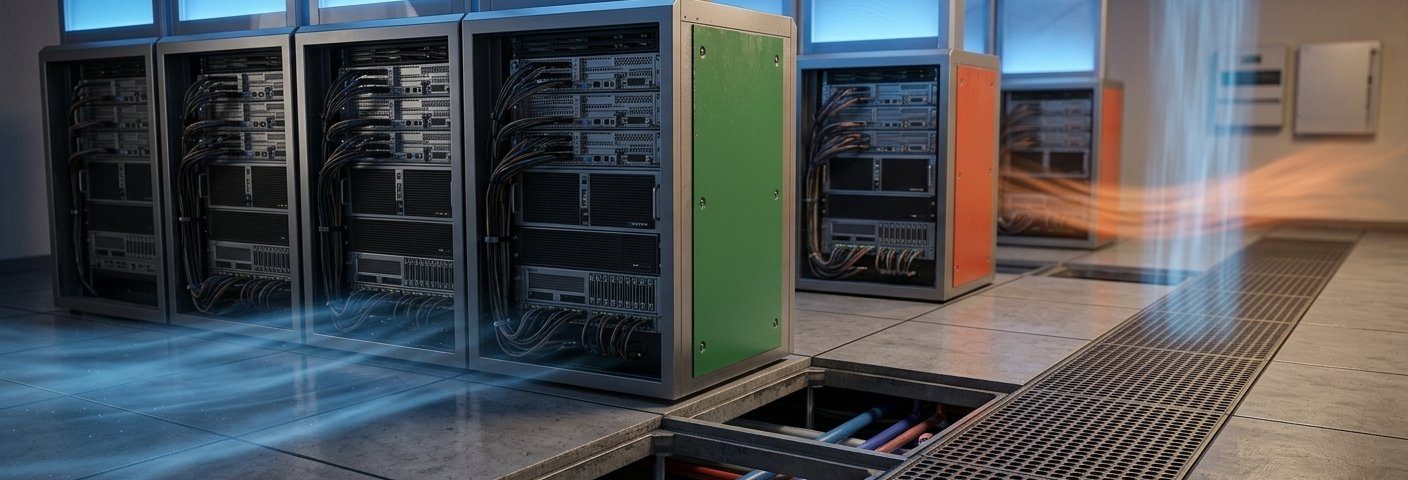
The connection between AI and water is a cooling problem. Data centres house thousands of servers running at high intensity, generating enormous amounts of heat in the process. To prevent that heat from damaging hardware and degrading performance, facilities rely on cooling systems that consume significant volumes of water.
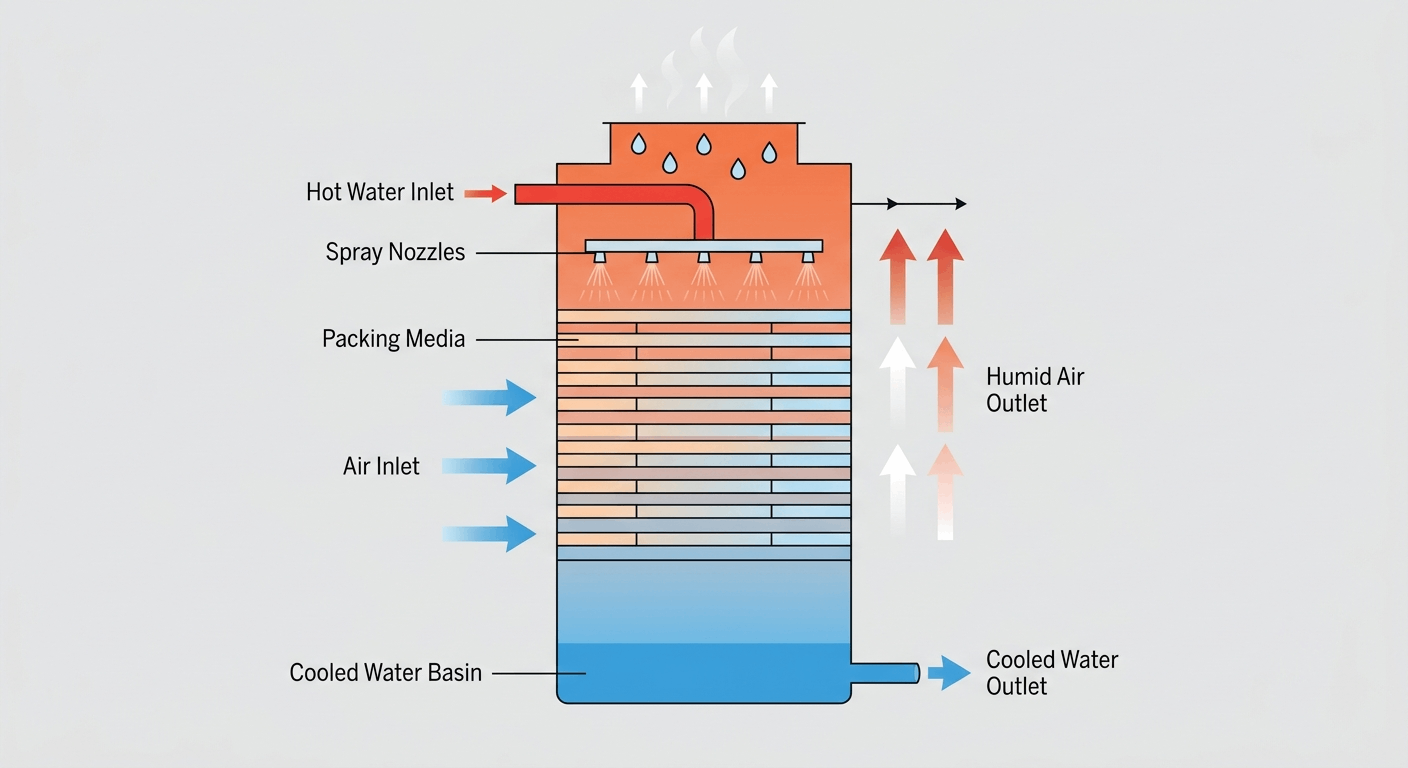
The most common approach is evaporative cooling, where water absorbs heat from the servers and is then vented as steam. The water is not returned to its source. It is consumed. Closed-loop systems recirculate cooled water rather than venting it, which reduces consumption but increases energy demand. The choice between these two approaches depends on climate, water availability, and operating cost, and facilities in warmer or drier regions face harder trade-offs than those in cooler climates.
AI workloads intensify this problem considerably. Standard cloud computing generates heat in manageable and relatively predictable volumes. Generative AI, with its high-performance graphics processing units running complex inference and training tasks, produces significantly more heat per unit of compute. The cooling burden scales accordingly.
The Numbers
The scale of data centre water consumption has only recently entered public debate, in part because disclosure by major technology companies has been inconsistent. The figures that have been published are striking.
According to research from the Lawrence Berkeley National Laboratory, US data centres consumed approximately 17.4 billion gallons of water directly for cooling in 2023. When indirect consumption through electricity generation is included, that figure rises to an estimated 211 billion gallons for the same year. The same research projects that direct consumption could double or quadruple by 2028.
Google reported consuming around 8.1 billion gallons of water across its operations in 2024, the vast majority of which was used at data centres. A single facility in Council Bluffs, Iowa used approximately one billion gallons over the course of the year. At a global level, estimates from the International Energy Agency suggest data centres consumed around 560 billion litres in 2023, with projections pointing to more than 1.2 trillion litres by 2030.
A UN University report published in 2025 projected that by 2030, data centres could consume 9.3 trillion litres of water in total, enough to supply drinking water to 8.1 billion people for more than a year.
Individual AI queries also carry a water cost, though the figures vary depending on the model and infrastructure involved. Research from the University of California, Riverside estimated that every 20 to 50 ChatGPT queries consumes approximately 500 millilitres of water when both on-site cooling and electricity generation are factored in. Across hundreds of millions of users, that adds up quickly.
Where the Water Comes From Matters
The environmental significance of data centre water consumption depends largely on where facilities are built and what local water resources look like. Many of the largest data centre clusters in the United States have been developed in water-stressed regions, including Arizona, Texas, and parts of the southeast, areas already under pressure from drought, population growth, and competing agricultural and municipal demands.
Australia faces a version of this tension. The country is one of the driest inhabited continents on earth, and its water resources are concentrated in ways that make regional scarcity a persistent concern. Research by MSCI, which analysed roughly 14,000 data centre assets globally, identified Australia among the countries where existing facilities are most likely to face increased water scarcity days by 2050. More than 260 data centres are already operating across Australia, with additional facilities in the pipeline. The Australian Energy Market Operator has projected that data centre electricity consumption could rise from 2% of the national grid today to 12% by 2050, a trajectory that carries proportionate implications for water demand.
At the same time, global AI investment is accelerating. One forecast places the total value of global AI investment at $5 trillion by 2033, up from $189 billion in 2023. The infrastructure required to support that investment will need to be built somewhere, and water availability is increasingly a factor in where it can be built responsibly.
What This Means for Industrial Water Management
The conversation around AI and water is not just a concern for technology companies. It has implications for how industrial operators across all sectors think about water as a resource, a cost, and a compliance obligation.
Several dynamics are playing out simultaneously. Water scarcity is concentrating in the same regions where industrial activity is heaviest. Regulatory scrutiny of water discharge and consumption is increasing across Australian states and territories. ESG reporting requirements are pushing companies to account for water use in ways they have not previously had to. And public awareness of industrial water footprints, amplified by the AI debate, is changing what communities and investors expect from major operators.
For mining and resources companies in particular, the parallels with the data centre challenge are direct. Remote mine sites in Western Australia and the Northern Territory already operate in environments where water is scarce, expensive to source, and subject to strict quality requirements. Process water, potable water, and wastewater all need to be managed as separate streams, each with its own treatment requirements and discharge standards. Doing that well demands the kind of engineering expertise and site-specific knowledge that does not come from off-the-shelf solutions.
The industries that will be best positioned as water pressure increases are those that have already built closed-loop thinking into their water management, treating water as something to be used, cleaned, and reused rather than consumed and discharged.
Water Reuse in Practice: ABCO Water
ABCO Water has been designing and delivering water and wastewater treatment systems for industrial clients in some of Australia’s most water-limited environments for decades. Their work spans mining operations, remote accommodation villages, road construction camps, and mineral processing facilities, with projects in Western Australia, the Northern Territory, and West Africa.
What connects these projects is the operating environment: remote locations, limited access to external water supply, and a need for precision across every stage of the water cycle. A garnet mining operation near Kalbarri required process water with an electrical conductivity of less than 30 µS/cm for final product washing, a specification that demands careful treatment and consistent monitoring. A washbay wastewater treatment system for an iron ore mine near Onslow had to manage runoff from a working mine while meeting discharge requirements in a region with limited capacity to absorb excess water. A rare earths project 135 kilometres from Alice Springs required both potable water and wastewater treatment at a remote accommodation village, far from any municipal infrastructure.
In each of these cases, water reuse was not an environmental aspiration but an operational necessity. Treating and recycling water on site reduces the volume that needs to be sourced externally, lowers transport costs, and ensures compliance with the discharge requirements that govern industrial sites in sensitive environments.
As the broader conversation about water scarcity, accelerated by the AI infrastructure debate, prompts more industries to think carefully about their water footprint, ABCO Water’s approach offers a practical model for what responsible industrial water management looks like in the field.
A Shift in How Water Gets Counted
The AI water debate has done something useful. It has made the cost of water visible in sectors where it was previously treated as a given. Technology companies that once spoke loosely about sustainability are now publishing water usage effectiveness figures, setting replenishment targets, and facing genuine regulatory pressure to locate facilities in ways that do not deplete local water supplies.
That same reckoning is coming for industrial operators more broadly. The combination of climate variability, tightening regulation, and public scrutiny means that water management, including how much is used, where it comes from, how it is treated, and whether it is returned to the environment in a usable form, is moving from a compliance obligation to a strategic priority.
For industries operating in water-limited environments, the shift is already underway.

With a background rooted in conversion-focused copy, Markus doesn't just write to fill space. He builds narratives designed to move the needle. He understands that a well-designed website only reaches its full potential when the words on the screen are as fast, sharp, and responsive as the code beneath them.
- What AI’s Water Footprint Means for Industrial Water Management - June 14, 2026
- Perth’s Top Traffic Lawyers: What to Look For in 2026 - March 12, 2026
- Expanding Overseas as an Australian tech Firm: A Guide to Employer of Record Services - March 4, 2026